The Four Rules:

  • 1. All guns are always loaded. Period.
  • 2. Never point a gun at anything you are not willing to destroy.
  • 3. KEEP YOUR FINGER OFF THE TRIGGER UNTIL YOUR GUN IS POINTED AT SOMETHING YOU ARE WILLING TO DESTROY.
  • 4. Properly identify your target and what is beyond it.

Sunday, July 1, 2007

Emergency Gear: Electronic Sights and Flashlights

You've seen them at gun shows, those cheap, knock off electronic dot sights in their no-name boxes. They're dead ringers for the much more expensive optics used by SWAT teams and Special Forces. I know you want the cheap knock-offs to be the same quality, but they just aren't. The gun industry isn't like buying laundry detergent at Safeway or dog food at Costco. On one hand, everything is outsourced, but there is very little "rebranding" that goes on. If you are serious about gear that you can trust your life to, you are just going to have to crack open the wallet, let the moths out, and pony up for the real thing.
Now, there is lots of gear to choose from, and lots of it is over priced or over rated for what the average person needs. As much as I lust after the new Aimpoint M4 with its eight year battery life, I simply don't need anything that trick. The EOTechs will work just as well for me, have a much lower buy in, and have the mount built right in which saves another $100.

There's a good argument to be made that we really don't need more than a $200 Burris SpeedDot (ok, or that we even need them at all, but we'll address that at some other point.) Frankly, the Burris will do everything Joe Average needs done outside of extreme situations.
Myself, I think the EOTech is worth the extra money for a primary rifle because it will take almost as much abuse as an Aimpoint. Where it fails are areas I'll never to use it in - SCUBA insertions, being run over by a HMMV, in other words, extreme combat ops. Face it, few of us are never going to see any combat ops unless things really go to hell in a hand basket. Why not the Burris? Because it's internals just aren't as solid. Notice that a lot of police and military units use EOTechs. Notice that none use Burris. If we really have to subject our rifles to serious abuse due to an event like Hurricane Katrina, the EOTech stands a very good chance of taking it, the Burris is probably not going to make it. Face it, if decent products like the Burris aren't to the point of taking real abuse, the knock-offs aren't going to. That goes for the electronic dot sights we're talking about here as well as for the fantastic and durable Trijicon ACOG tritium powered scopes that are also very popular with people who depend on their rifles and gear on a daily basis.

So, the $375 EOTech is a good substitute for an $800 Aimpoint, the Burris is acceptable, but the $40 Chi-com gun show special just isn't going to cut it. In fact, do yourself a favor and keep on walking when you see them for sale at gun shows. They won't even hold up to the recoil and average knocking around of a range gun that sees moderate use. Even worse, if you have one you'll tell yourself that putting it on your emergency rifle is "only temporary" until you buy something more expensive. But, it's going to stay there for years. There are plenty of good reasons to have an electronic dot sight, but you are much better off running iron sights than having a piece of gear which cannot be trusted.Now, something has to power this stuff, so is that a factor? Yes, and of course, here it comes.... no. AA is the standard for everything. A friend sent me a bit of insight by instructor John Farnam: Best power source is AA batteries. Under nearly any circumstance, you can kick down a door, locate a TV remote, replace your dead batteries, then rejoin the fight. Such 'Exigent-Acquisition' is neither taught nor thought about much in this country, but we need to start!"

It's hard to argue with Farnam and I like a lot of stuff he comes out with. His point about AA batteries is well made and bears serious consideration. Even if you aren't going to be kicking down doors looking for batteries (and hoping there's not another guy just like you on the other side of the door who wants to keep his batteries), AA's can be found in any town, airport, and campground. If you buy your gear to do double duty - daily chores as well as emergency use, then battery availability is doubly important. There does come a point when you have to ask yourself how what is taught in class translates to the real world, the real threats, and, most importantly, how you are willing to interact with the world. There's no trick question here, just the observation that each person has to make their own choices.

No Aimpoint will take AA batteries, but EOTech has a models that will. Their N battery unit is shorter and so will sit farther forward, but the AA unit gives longer battery life on top of having a more convenient battery source. Despite the obvious advantages of the AA versions, I like the N units because of their smaller size.
Since battery type can be a consideration for electronic dot sights, you really need to look at the other battery dependent gear you will have with you. A small digital camera should come along if you have the room. If not, don't sweat it, but documenting the events could prove insightful in the future for both personal and legal reasons. If you feel your cell phone is something that has to keep going, you can find adapters that will allow it to run off a battery. Every version I've seen uses a AA's, so keep that in mind depending on your needs. A flashlight is going to be your most used, and potentially most important, battery dependent item. We covered electronic dot sights first because they are most specialized and if you need one you probably REALLY want it to work. But, you and those who depend on your will be at a severe disadvantage if your flashlight fails.

Dive lights tend to be very strong for their size, waterproof (obviously), and shock resistant. Dive gear isn't cheap, but an extra $15 now won't even be noticed by next month. The ubiquitous Mini-Mag is tough, water resistant but not waterproof (trust me), and you can find spare bulbs in any hardware store. Pelican makes lights for hard-use and has AA models. Inova is well respected and is a top choice by people who know what they are doing. Surefire and Streamlight are probably the most well respected names in "tactical" flashlights. They are also the most expensive. Thankfully, this is an area where quality doesn't have to break the bank. Avoid the $3, plastic jobbers that your grandmother kept in the kitchen drawer for black outs. Think in terms of portability and durability. The big Mag-lites will take (and give, if you want to be able to use your light as a weapon) a beating, but tend to be heavy and cumbersome if you are trying to negotiate your family to safety.
Most current, "white light"/high intensity flashlights use the 123A 3.0 volt batteries. You might not be familiar with them, but they are very common in camera gear and so aren't too difficult to find. Any Wal-Mart or Walgreens will usually have them. I have run into problems because the stock kept on hand is relatively low. Also, if you are going to travel, most gas stations and remote convenience stores will not stock the 123A's.
Some lights come with rechargeable battery packs. I do not recommend such things for emergency use. Rechargeable batteries have a bad habit to dying without much warning. You might only have a couple of seconds of dim, yellow light before the entire unit leaves you in the dark. I found this out through personal experience on the side of the road, in the middle of nowhere, at midnight, with my buddy's car buried to it's axles in sand. Of course, once spent, you need a place to plug your light into, something which will be non-existent in an emergency situation. Also avoid the gadget flashlights. These are the ones with a built in radio, or you power them by shaking them, or you turn a hand crank, or, recharge them with solar cells. Such things are sold on their gimmick factor and never on their quality. They are always cheaply made, break easily, and perform poorly. Remember, we are talking emergency gear here. If it doesn't work, you and your loved ones could die or, at the very least, suffer severe hardship if it Save your gadget self-indulgence for things that

A side note is to keep a handful of Photon Micro-lights on hand. I prefer the II model for it's "lock on" switch. It's surprising just how much that single LED will light things up when it's truly dark.

Friday, June 29, 2007

Racism: an Issue Whose Time Needs to Pass


Racism, and by extension discrimination, is based on the idea that decisions and actions will be taken with regard to someone’s ethnic lineage. If one makes any judgement based solely on one’s skin color, the distinction becomes even more extreme. For instance, "Italians make good food and Germans make good cars," is racist, it’s even discriminatory, but it’s not a negative and there is fairly ample evidence to support each contention. However, if I say, "Italians don’t know how to make anything that doesn’t break," it’s now discriminatory in a negative way no matter what one says about Ducatis and Fiats.

To take it further, "white men can’t jump, and so they will be banned from the NBA" is an example of extreme racism and discrimination. All the statements preceding that one could be said to be one’s opinion. But, when it comes to barring someone from an activity because of their ethnicity, then it becomes a legal issue.

If a child is barred from attending a particular school, eating in a particular restaurant, or drinking from a particular water fountain, it is racism at it’s worst. If the power stopping her is a private individual, that person can and will be tried, convicted, and spitted for depriving the child of her civil rights. If the power stopping her is the government, then the child will be condemned as being racist herself and standing in the way of decades of civil rights activism.

Say what? Does that make any sense?

Well, it does to some. The Supreme Court overturned forced racial diversity in a brilliant and stunning exhibition of common sense. Of course, the person being denied entry to a school in this case was white and wanted to go to the school near her home. The school board said, "no way, we have enough white students."

The stated goal of the old civil rights movement was to stop the negative discrimination that was stacking the deck against so many people. If that is the case, then when society comes to a point where race isn’t a consideration, everyone should be happy. Right? Obviously not. People are calling this recent decision discriminatory and pushing us back to the days of segregation.

Brown vs. Board of Education, cited by both the consensus and opposing members of the court, dictated that schools could not make decisions on where to put a student based on the student’s skin color. That was a great decision. Sadly, this is not what people took away from that ruling.

Now, "civil rights" activists are horrified by the most recent SCOTUS decision. Why? Why if the idea of racial parity is the ideal would anyone who says they are concerned about civil rights want a policy based on race to stand? The answer is simple and one of the oldest in the history of the world: because they have a power base that needs the status quo to continue.

Many of the most vocal minority rights leaders would be out of work if race stopped being an issue. The end result of what they really want is not an end to discrimination but to replace negative discrimination with positive discrimination, aka preferential treatment.

I’m no fool. Negative racism towards blacks (and it’s "black," not "African-American," the same way I’m "white," not "European-American," and first and above all we are "Americans") still exists in this country. It’s a terrible thing and should be stomped out wherever it is found. However, two wrongs don’t make a right and if we are going to strive for a higher ideal, we need to live it. Race shouldn’t be a factor for anyone and if the law is to recognize that, it must recognize that across the board. In fact, it shouldn’t even have to recognize anything, race simply needs to become a non-issue and it won’t if official policies are based on it.

Want to help the poor? Then help the poor. Want to help AIDS victims? Then help AIDS victims. In reality, there will be problems that are defined by racial lines, but they are not as prolific as we make them out to be and often the division is one created by those special interest groups who gain power and notoriety by doing so. But, in cases which must be addressed as a racial group, do so in the same way any other group would be addressed, be they unwed mothers, the homeless, unemployed military veterans, and other such groups having a difficult time. Don't do it by punishing or making policies which affect other racial groups.

I can’t say this enough. Two wrongs don’t make a right. To continue racism in any form is to hurt society and plays only to those with vested interests. When a black presidential candidate complains about racism, I have to ask myself just how much racism can there be? when many polls show that same black candidate in the lead.

Reject all racismand in any form you find it, unless of course you are shopping for a nice car or looking for a good plate of baked ziti.

Thursday, June 28, 2007

Shades of Tammany Hall


As the baby boom generation ages, it’s been interesting to watch the slow shift in beliefs touted as gospel by The Left. In the 1960’s and 1070’s, it was about freedom and individual expression. Now, how ironic is it that, the hue and cry is for more government and lamenting the rise of true individual expression.

This was driven home to me by two discussions in as many days.

The first was on a local radio program. The host and guests were lamenting term limitations and the fall of the old-boys’ network in the Arizona state legislature. Was this on the conservative talk radio that Hillary Clinton wants to impose limits upon? No, this was on local NPR affiliate KJZZ, broadcast from the campus of the Arizona State University in Tempe.

Two former state-level politicians were telling the world how sad it is that members of our legislature don’t spend their first few terms mute, literally not allowed to introduce any measures and rarely allowed to join in debate. In the "good old days," you had to earn the right to represent the people who elected you, and you had to get your campaign money through one man. Sure, it was bad if you were at odds with that powerful figure, but, really, that was your own fault, wasn’t it? It made things soooo much easier and efficient. To add insult to injury, freshmen senators now have the audacity to think that they are an equal of the majority leader because their votes carry the same weight. Yes, those halcyon days of yore were so much better. New members of the club could be ushered in to all the secrets of the inner workings, shown the path to life long political power, and the establishment had continuity and a sure hold on the legal process in Arizona.

The second discussion was a BBC podcast where a Silicon Valley pariah was claiming free content on the internet is destroying society. Why anyone could publish anything! This is having the terrible consequence of destroying the "legitimate" media. And, it undermines traditional education where students are spoon fed selected facts by the government system. Who is there to censor and decide what the public sees and reads? Why, the society is going to crumble because we will be unable to distinguish fact from lie if anyone can say anything. At it’s core, says this expert, is the lack of money. No money is being exchanged for information and this upsets the dynamic in an unacceptable way. I can’t help but wonder if he was recently turned down from a job with a newspaper. It never occurred to him or the interviewer that maybe the public is tired of the left wing slant and selective culling of the news by the major media outlets, so that we gladly adopt new sources of information.

What happened to the idea of the freedom of expression, once held so dear? What happened to the values of a free market? What happened to the idea that a free flow of ideas is healthy for government, society, and commerce? What happened to over throwing the man and power to the people?

While the party line has changed over the years, both of these articles find themselves still firmly planted in the fields of current Liberal thought. Rather than the old Liberal "I just want to be free," it’s the now, "the public is too stupid to take care of themselves, and an intelligent person such as myself has to tell those poor sods up from down."

It’s this basic distrust of the average person that fuels the Ruling Elite mentality of the Left. They are distrustful and scared of what a society unfettered by an "enlightened", stranglehold rule might get up to. I can understand that to a bit. After all, the old saying goes, "an individual person is smart, but the general public is stupid."

But so what? In this great experiment in democracy, the common man eventually finds his feet no matter how fast the waters of change are flowing. And, 99 out of 100 times, they find not only solid ground, but profitable, solid ground long before the government or educational institutions are even aware there is a flood. In doing so, the common man pays the taxes that allow the Liberal Elite to gripe about how stupid the common man is.

Times may change, and those who feel they are being denied their place in a structure they are used to are going to be spitting out sour grapes. That’s fine. Change brings opportunity and our modern age is constantly bringing more voice and influence to the average, stupid, common man like myself. If someone is afraid of that, then maybe they have something to be afraid of.

Sunday, June 24, 2007

Constitutional Erosion and the Second Amendment: Why America Should Care


Anyone giving this page even the most cursory glance will see that firearms hold a significant interest to me. Some of you are understand that, some don't. But, even if you aren't a gun owner, I'd ask you to read this particular post. And, if you are a gun owner, I still think you will find something in this one to think about and talk about with friends and family.

In future posts we'll cover some of the more pointed issues about gun control. However, I'd like to take a different tack today, one that affects all Americans - liberal, conservative, even the ambivalent. It has to do with the course we set for ourselves and our country.

For years, the gun culture has warned about marginalizing the Second Amendment. I'm not going to go into Constitutional scholarship, but a bit of background is important for a person to understand what is at stake and why non-gun owners need to care about this issue.

The Second Amendment says:

A well regulated Militia, being necessary to the security of a free State, the right of the people to keep and bear Arms, shall not be infringed.

The anti-gun crowd, including the the ACLU, talks about the right to arm ourselves as a collective right. That means it belongs to society as a whole, specifically the government, not an individual. They cite a few Supreme Court decisions from the 1800's and one from the early 1900's to support that position. During that time frame, the entire Bill of Rights was viewed as recognizing collective rights, with the individual states having power to regulate such things as freedom of speech and of the press.

Today, we have correctly gone back to the original intent of the founding fathers and the idea of inalienable, individual rights. Even the typically liberal law journals have been forced to recognize that when "the people" is referred to, it identifies the private citizen. In "The Embarrassing Second Amendment," Sanford Levinson, a Harvard law professor, detailed this for the Yale Law Review.

That's a quick background and, like I said, we'll go into the agonizing details of Constitutional Law at another point in time. Even if you don't completely agree with the individual rights interpretation of the "the right to keep and bear arms," I'll ask you to admit that the Second Amendment is part of the Bill of Rights and has never been rescinded.

When we ignore entire segments of the Constitution, and individual and civil rights by extension, we begin down a slippery slope. What happens when we allow one part, any part, of the Constitution, to be ignored, is that we accept the idea that our laws and rights are amorphous, changeable by the government and public opinion. Of course, the entire idea of the Constitution is to protect society from that very thing.

We live in a society with two very distinct evils in our midst: a government hungry for more power and a growing population who wish to abrogate the responsibilities of adulthood. That means there are fewer and fewer challenges from the people when rights are infringed.

I vote Republican. I admit that. It's not that I have any love for the Republican party, but it's that the Democrats scare the beejeebers out of me with their desire for a nanny state. Sadly, the Republicans no longer stand for individual rights, either.

Alright, am I am alarmist?, I mean, the government needs to be allowed some regulation such as interstate commerce. Yes, but, let's look at some big and small things happening in our country today. We have Hillary Clinton's "village" to raise children. That's not a nice "community" thing where someone watches your kid while you run to the store. She means that the government knows better than you do about what your child needs to learn and who they should be, and that they have the right to enforce their will over your very own children. She has said exactly that. We have Rudy Giuliani who, as Mayer of New York City, used his prosecutor's background to "creatively" interpret laws in ways they weren't meant to be used but which allowed him to go after the people and groups he wanted to affect. He even brags about such issues in his book Leadership. People accepted it because they liked the result, but was it the right thing to do? Shouldn't he have gone through the proper process to pass actual laws doing what he wanted?

Agree or disagree, this is a problem. We complain about The Patriot Act, but we cower and cringe when it comes to defending ourselves. Just the other night, I was dumbfounded when a news anchor talked about a recent murder, "but the good thing is that a witness called 911 so quickly that the police found the suspect before he could get away." Geez how good was that for the victim? Wouldn't it have been better if the witness stopped the murder? Is our response to a random killing to pick up a telephone? It is because we have been led to believe that it's the government's job to protect us.

We often hear about police chiefs saying, "yes, fighting back saved a person this time, but they shouldn't have taken the law into their own hands." I have a huge problem with this on many levels. For one, self-defense is not vigilantism. Two, in a government for the people and by the people, the law is inherently in our hands to begin with. Vigilantism is wrong because it denies a person due process under the law, not because citizens want a wrongdoer off the streets.

How is a society supposed to maintain individual rights when we ask the the government to do for us what we won't do for ourselves? You say, "that's dramatic, of course we need the police!" I never said we didn't. But, I point out that societies collapse slowly, not in a dramatic parking lot attack. If we won't take charge of our lives at the dramatic moments, we are going to have a difficult time with those things that bring about doom through slow erosion.

The answer, of course, is our Constitution. It's the document that has made our country unique in all of history. Even when it was first drafted, it was something very special, unique in putting the person before the state. Today, John Edwards talks of a politician's "followers," not supporters, not constituents, but "followers," sheep following obediently behind their master.

If we are to keep the Constitution meaningful, then all of it has to be meaningful or it is doomed. Divided we will surely fall. And that is really the point here: if you believe in one part of it, you need to believe in all of it. We can't pick and choose for all of society and for the generations who follow us. We must hold our government to the letter of the law and the intent of the Constitution. If you even for a moment believe the Second Amendment supports an individual right when it says "the people," or if you even slightly believe it just might, maybe mean the individual, then it has to be part of the bundle of rights which we stand together to defend. If you believe that the issue needs to be decided by the courts, then it needs your support until due process has had it's day.

History is not over and attacks on our rights continue. Don't like the Patriot Act, don't like McCain/Feingold, don't like wire taps, don't like people being quarantened without even having a judge review the facts, don't like Guitmo, don't like anything you feel infringes on civil rights? The cure for ambivalence is in the individual caring and taking part in the process. And the tool to use and the shield behind which to withstand the assaults on our rights is the Constitution.

Let no child be thrown out of the lifeboat. Those journalists who feel their First Amendment rights are being trampled supported the trampling of the Second Amendment. Those churches who supported gun control due to (erroneous, IMHO) pacifist beliefs have seen their First Amendment rights severely limited. Those same groups such as the ACLU who supported the collective/"only government should have guns" position now can't understand how we got to the point where we have government invading our privacy electronically and literally having men in black masks and toting machine guns kicking down our doors with little cause or provocation.

It goes beyond the straight Constitutional issues as applied to institutions such as the press and church and it goes beyond issues such those with which the ACLU concerns itself. We see the results and consequences everyday when small, well funded special interest groups are allowed free sway to reinterpret a document labored over by the men who fought to make America free. Parents who saw guns as instruments capable only of evil have seen their children murdered in the classroom, unarmed teachers having no way to fight back. City councils who wanted easy answers for inner-city crime and directed their police forces to focus on gun confiscation and gun buy back programs have seen their crime rates sky rocket while those cities and states which enacted right to carry laws have seen their crime rates plummet.

The McCain/Feingold Campaign Reform Act took away the First Amendment rights of all groups, groups formed because individuals of like minds had no way for their voice to be heard otherwise. Agree with their voices or not, they do have a Constitutional right to free speech. Now, that right is no longer recognized. In the meantime, wealthy millionaires such as George Soros can still be heard and have the financial means to plaster the media with their own views. I can hear the Left cheering. But, it goes the other way, too. The NAACP is now limited in what they are allowed to promote, and people like Rupert Murdoch, the owner of Fox News, can say whatever he wants, too. Disturbingly, the cry seems to be that limits should be put on the Big Money, which is what McCain/Feingold said it was to do. There seems to be no outrage over the limitation on the Little Guy's First Amendment rights.

Just as with the "war on drugs," the "war on terrorism" has seen a large escalation in governmental power. The Patriot Act was hated by many, but it still passed. Wire tapping without court order, something done by every president, not just Bush, went into overdrive. We know that terrorists use our loopholes to hide from the government, but, as Benjamin Franklin said, "They who would give up an essential liberty for temporary security, deserve neither liberty or security." Or, as I tend to less eloquently put it, "it's all fun and games until it ends up on your doorstep."

If you don't want to see your rights taken away, then you need to make sure no one else has their rights taken away. The fight over gun control and the Second Amendment is where the most vicious fighting for the integrity of the Constitution is taking place. The tip of the spear is the National Rifle Association. They never say everyone must own a gun, but they unwaveringly say the Constitution can not be bargained away or it's the beginning of the end. Many non-hunters buy a hunting license each year because they support the game and fish departments of their state in conservation and recognize that such departments get a huge part of their funding through the sale of hunting and fishing licenses. Likewise, many non-gun owners pay the $35/year for an NRA membership because they recognize the Second Amendment as the focus of the attacks which, if successful, will mark the beginning of the end for the document which has made America unique in the history of the world.

If you are a gun owner and you don't have an NRA membership, you are letting the rest of us do the heavy lifting for you while you reap the rewards. If you aren't a gun owner but have a heart felt desire to see America continue on as one in which we celebrate individual rights, I would encourage your to consider the annual membership fees to the NRA as a small price to pay in order to back the one organization doing the most to support the Constitution. At the very least, be aware of the gun control debate and what is at stake so that you can respond and support the idea that the Constitution was meant for the people, not the government, when attacks on individual rights are made.

If you won't do it for everyone, one day you will find the issues you care about under assault, and who will be left to stand by you?

This idea was captured so well by Pastor Martin Miemoller in his poem, "First they came..."

They came first for the Communists,
and I didn't speak up because I wasn't a Communist.

Then they came for the Jews,

and I didn't speak up because I wasn't a Jew.


Then they came for the trade unionists,

and I didn't speak up because I wasn't a trade unionist.


Then they came for the Catholics,
and I didn't speak up because I was a Protestant.


Then they came for me,

and by that time no one was left to speak up.

Saturday, June 16, 2007

Motorcycles: A Primer, Part II

In the Part I, we looked at the basic controls of a motorcycle, safety gear, and being a passenger. Now, let's take a look at what to think about when it comes time to buy your own bike.

Safety cannot be over emphasized. Before we get into the fun stuff of looking at different bikes, let's remember that when things go bad at 60mph, the body is going to be punished. Motorcycles aren't cars. When you lose attention here or find yourself beyond the limits of your skill or machine, the price is far greater than simply tapping the breaks or steering into the spin. Make a mistake here and the odds of going down are much greater than those of a mistake causing you to wreck an automobile. Keep sober, keep alert, and realize that you are taking part in a sport defined by managed risk. The greater benefits are directly a result of those things that make the activity a greater risk. If you walk up to a bike and your little voice says, “not today,” walk away and do something else that day.The other thing we have to address is training. Simply put, get some. The Motorcycle Safety Foundation puts on weekend classes all over the country. They are well worth the cost. Second, realize that learning and becoming skilled on a bike isn't something you are going to learn in a weekend and a few months of practice like you did driving a car. There are so many variables involved that you will be adding to your skill level over the years. Don't get frustrated early on if you can't do something, and don't get overly cocky thinking you know everything after a weekend class.

Alright, there's no sense beating those drums anymore. You either get it and respect the damage asphalt can do to skin and what a Peterbuilt can do to your skull or you don't. Let's get to the fun stuff.

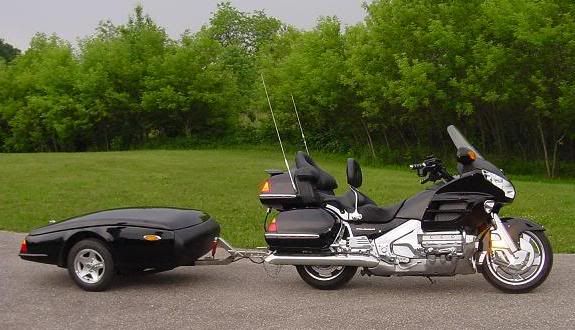
You've got some safety gear, you've taken your course, and you have a wad of cash just burning a hole in your pocket. You want a bike so bad you can taste it. But, you don't want to buy the “wrong” bike and you want to get your money's worth. The question always asked is, “what bike should I buy?”Honda Gold Wing, no doubt, anything else would be stupid. Actually, it's that answer that is stupid (I jest, I do like the Gold Wing, but someone shoot me if I ever put a trailer on a motorcycle). It's stupid because there is no one answer to “what bike?” It all depends on your size, age, maturity, amount of money to spend, confidence level, and what you want to do with it.

When you start talking to people about specific motorcycles, you will hear them throw descriptive numbers about. “I had a 250,” “that was a fast 750,” “I rode a 1200 across country.” What they are referring to is the engine size which is calculated by the combined cubic centimeters displaced by the pistons. That leaves a lot of details on the table, but engine size is much more significant in a lightweight vehicle such as a bike than they are in a passenger car. The reference will give you a basic idea about the size, weight, and power of the bike in question. This system is a throwback to the days when there weren't different styles of motorcycles, there were just motorcycles and the habit has remained.
Today, there are all dirt bikes, street bikes, and bikes that blur the lines between the two. For the sake of this article, and because it's what I know, we'll assume you want to ride on the street. With street bikes, there are basic types such as cruisers (Harley-style), sport bikes (the fastest and best handling), tour bikes (carry what you and your gear for days at a time), standards (basic bike – motor, two wheels), and dual sports (the mix of a street bike and off-road bikes). Of course, there are blends and hybrids and all sort of bikes to do things you have probably never even considered.

Buying a bike is a very personal thing that is as much a mix of heart and desire as it is mind and logic. If you want a particular bike, dream about it, can't think of anything else while you are at work, you're probably going to be fairly happy with it. There are a few different approaches to finding that steel vixen that will insist on finding a home in your garage.

There is a very common train of thought that says buy something used and small, learn on it for six months or a year, and sell it when your skills outgrow it. A lot of people have gone that route and have been very happy to do so. Many beginning riders will lay down their first bike, so why abuse a new bike and throw money on something you are going to scuff up? And, after all the lust, desire, and training, you might spend three months dodging Volvos, cleaning bugs off your helmet, and getting rained on and say to yourself “nope, this isn't for me after all.” If you find yourself at all hesitant, buying the cheap, used, small bike saves you from investing too much money on something you won't end up using.

If that sounds like an approach that works for you, a few bikes over the years are constant standouts in this category. The Honda Rebel 250 looks like a Harley that got hit by a shrink ray. The things run forever and you will probably be able to sell it for what you have into it. It is lightweight and easy for almost anyone to sit on and put their feet flat on the ground. Where the Rebel is a cruiser, the Yamaha TW200 is an odd little dual purpose bike. It sits low and has a very reliable motor; it's big balloon type tires roll over anything, and are great little bikes for exploring a campground or your neighborhood.
Moving up in size, the Suzuki GS500F is a great commuter for those wanting a big more punch than a 250cc will deliver. The same can be said of it's major competition, the Kawasaki Ning 500R (formerly the EX500). Both wear the clothes of a sport bike but are really standards – just good, solid bikes that will take the day to day grind.Really, any of the smaller Japanese bikes should be fairly inexpensive and will suit you well for learning. Stay bellow a 500cc motor and your insurance should stay at paltry levels. Keep that same 500cc ceiling and you can be sure to not have too much engine.

In the mid-size cruiser segment, the Star V-Stars by Yamaha are very popular – reliable, look good, sit low, and have a no-maintenance shaft drive. You rarely see the “cool” people talking about them on different forums, but you see a heck of a lot of the bikes during morning rush hour and in parking lots everywhere. The guys who actually use their bikes seem to like them a lot and the Star branded bikes are probably behind only BMW & Harley-Davidson for the number of die hard fanatics who don't want to ride anything else. The endorsement of the road speaks more loudly than anything in print – including my thoughts here – ever should.Is there such a thing as “too much engine?” You wouldn't think so unless you have ridden the crop of modern sport bikes. If there's one thing I will recommend the new bike buyer, it's to NOT buy a hyper-performance sport bike. Don't get me wrong, I think a person should buy what they like, but I encourage those with the go-fast bug to learn a bit before completely giving in to their speed lust. Most people think that a sport bike is the two-wheeled equivalent of a sports car. To a point that is true, but it doesn't tell the entire story. While a sports car is fast and “sporty,” it's a far cry from a race car. That isn't the way it works in the motorcycle world. The sport bike sitting on the dealer's showroom floor today is a true race bike and not very different from what the top riders were using on the track a few years ago. The power of those bikes is simply unreal. The bikes that aren't of the race bike family are sometimes left out because even racers don't use engines that big. Think of them as your very own cruise missile on wheels. Even the small 600cc sport bikes will blow the mirrors off my 1,450cc Harley. And that is why the old way of referring to bikes by engine displacement can be deceptive.This doesn't mean the person who wants to go out and carve the corners is caught in a Catch 22 of “I have to learn before I can do, but how can I learn if I never do?” There are plenty of bikes that combine more than enough horsepower in packages that are friendly and handle well. The shining example in this category is the Suzuki SV650S (the "S" is for the fairing, there is a "naked" model, too.) It's mid-size, v-twin motor pushes the bike along with a predictable power curve not nearly as sensitive as a high-strung repli-racer. Along the same lines but with a four cylinder mill, the Yamaha FZ6 is sometimes referred to as a sport bike, sometimes as a “standard with a fairing” (one of those hybrids, again) and is nothing but loved by it's owners.In this mid-sized engine group is one of my favorite bikes, the Kawasaki KLR650. It's cheap, it's ugly, it's slow, it's reliable, and you can ride around the world on it. A “thumper,” or single cylinder motor, this bike has been around since the 1980's and received it's first significant, evolutionary (but not revolutionary) make over as an early release 2008. This bike is not for someone who wants to look good going down the road, it's for those who want to go down any road they look. The over sized gas tank and fuel sipping habits let a rider cover a lot of remote country between fill-ups. You just have to respect a bike like that. We started with the idea of “small, used, and cheap” and have moved up the ladder to mid-sized bikes for people who want a bit more power. By no means have we covered the entire gambit, but we've given a good bit of info to think about and a few bikes to Google in order to see how they hit your fancy. Size, the engine and physical dimension of the bike, will be a factor, but you won't know if you and the bike fit each other until you get into a showroom and sit on it. Don't be surprised if the dealer won't let you go for a test ride. Would you let a rank beginner ride your bike?

Bikes are more maintenance intensive than the hands-off cars we are used to today. Some people get worked up over one type of widget being more reliable or requiring less maintenance than some other type of widget. My advice at this stage is to ignore all of that. If you stay away from the high-strung sport bikes and anything Italian, maintenance won't be bad and you'll figure it out for whatever you get. Once you have more experience, you can decide what you are willing to do and what you'd rather not have to mess with.

If you are an older rider entering the sport or feel you have the maturity to control your throttle hand, I would still recommend against jumping right onto a hard core sport bike. Riding one safely goes beyond maturity and self-control. They require a large dose of experience to keep from getting in over your head. But, if you want that Honda Gold Wing so you and your wife can take off for a month and see the country, then don't feel as if you should stop yourself (just promise me you won't pull a trailer.) Lusted after that big Harley since your uncle had one? Knock yourself out. Just remember, these are bigger investments and bigger bikes - they are easier to drop and more expensive to fix than that used, small, beater bike. If money isn't an object, then don't worry about it, and we should really get to know each other better.

In the end, you have to like and want what you buy for it to be worth your money. Decide what you think you are going to want to do, look at the bikes that will do it, cross reference with your budget, and take to the open road. This is a sport about emotion and desire. If you deny yourself those basic elements, then you're shorting yourself before you even hit the starter button on your new bike.

What do I wish I had known when I started? I wish I had known how great it would be so that I could have started even earlier. Now get out there and ride!

Harley-Davidson Road Glide

This is my ride, the Harley-Davidson FLTRI Road Glide.

People react differently to Harleys – they either love 'em or hate 'em. I admit, I used to be in the latter category. Prior to purchasing my Road Glide, BMW held my interest, mostly due to their legendary reliability.

But, in the late 1990's and early 2000's, things in the motorcycle world shifted. BMW decided to reinvent themselves as an upper-end boutique shop. Along with that seemed to come a new attitude, and the internet was filled with previously unheard of problems and a German attitude towards customer service. Who says the Nazi party is dead? At the same time, the Harley Twin Cam engine was establishing itself as a major step forward in both reliability and durability from the Evolution, which was pretty good in it's own right.

After getting ignored about ten times to often and fighting with their service department, when it came time to replace my BMW GS, I decided to see what all this Harley hullabaloo was about. I am a big guy and I like to do long miles and travel on my bikes. Harley has a few distinctly different lines, but I knew I wanted one of their touring models. These models are often called “baggers” because of their factory hard saddlebags (properly termed “panniers,” but get an American to use that word.)

I had done an Iron Butt Association ride on an Electra Glide and found that I really enjoyed the strum of the American V-twin motor on those long, dusty, desert byways. H-D has three basic tourers – the Electra Glide that uses a “bat wing” fairing mounted to the handlebars, the Road King that uses a simple windshield mounted to the handlebars, and the Road Glide that uses a fairing mounted right o the frame. I'd found Electra Glides to get a loose at the higher speeds - which makes sense when you think you have barn door strapped right to the forks. In theory, the Road Glide wouldn't have those problems. In fact, the frame mounted fairing not only put the wind pressure right to th frame, it actually would help protect the top of the forks and the handlebars from buffeting wind.

Also, the touring models have an extra heavy duty frame and transmission meant for wracking up the miles. What you trade off in light weight and handling, you make up for in load capacity and longevity. If I want to go fast, I'll take a car. When I want to experience the road, I'll take a bike. The bagger trade off was more than worth it to me.

So, I went out in search of a sierra red Road Glide, found it, bought it, and now I'm a Harley die-hard like so many other people. I don't like the “lifestyle” when it's all about black leather fringe and bar hopping. I love these bikes despite the lifestyle that so many others buy into. The bikes are solid and built with a level of durability that no one else matches. The components are of the highest quality and Japanese and even BMW items seem downright flimsy and hobbled together after being used to the way a Harley is built. They are slow, they are over priced, but they have fixed their reliability issues long ago.

And, now we come back to that element of riding that is so essential and yet so inexplicable, that certain something about going down the road on a bike that speaks to you that is the essence of what motorcycling is. For me, the Big Twin Harleys have it like no other bike around. They are raw and surly, elemental and American, and if anything made of chrome can be spiritual, it's a Harley-Davidson.

Colt Python

Photo by Ken Lunde

The last time we looked at a gun on these pages, it was all about function. This time, we're going to look at the Colt Python, a revolver that is all about essence.

Built on the old .41 frame, Colt wanted to create the ultimate .357 magnum revolver, undoubtedly spurred on by the affluence and excitement of post-WWII America. They slicked up their tried and true action, put on a swanky full-underlug barrel with a ventilated sight rib and a legend was born.

The Python is notable for is excellent finish with a deep "royal blue" being the most common. It was also made with a bright nickel finish and later in stainless steel. People rave about the action of the Python as well. It is roller-bearing smooth with just the slightest hint of stack at the end of the double-action pull. Single action is crisp and light and darned near perfect.

Over the years it was made with 2", 4", 6", and 8" barrels to serve a variety of needs. The 4" and 6" are the most common. The barrels have a decreasing radius bore which means it's smaller at the muzzle than at the throat. The difference is very slight, but it is why Pythons are so amazingly accurate and why they often exhibit no loss in accuracy if the barrel is accidentally ringed due to a squib load.

The 2" went after the self-defense/plainclothes police crowd and competed against the 2.5" Smith & Wesson Model 19. The 8" version was built with an eye towards the hunting crowd. The problem is that with a gun as pretty and as costly as a Python, few people were inclined to submit their guns to the riggers of daily carry or the game field.

There are also questions about the Python's suitability as a piece of life-saving gear. All machines have a weakness and the one with the Python is a Catch 22. That action which I raved about is fairly weak. Something as minor as a drop onto a table top can knock it out of time. Because the secret to the precision and beauty of the Python is handfitting, a gunsmith can't simply drop a few new parts in and expect minor fitting. For example, most 'smiths have set prices for Smith and Wesson and Ruger repair work. It's not uncommon to see Pythons listed as "by the hour" because they could be working on that beast for quite some time in order to get it's delicate parts moving properly.

Now, for range use, light duty carry (not uniformed police or a ranch hand's pistol - both situations which tend to bang guns and see lots of abuse), and home defense, I wouldn't hesitate. And, since the 2" offering is so darned cool, I'd just have to carry it sometimes, provided I ever find one at a decent price. If you find a used one, make sure you check the timing. You do this by cocking the hammer with one hand while putting slight pressure on the cylinder with your other hand. Then, pull the trigger and let the hammer down slowly while feeling for the cylinder to lock into place. Colts don't reach full-lock up until the trigger is pulled, so it's easy to think one is out of time when it is actually just fine.

In the end, the Python is an elegant revolver, a product of the progressive engineering minds of 1950's America. It ceased to be a regular production item some time ago, but it will occasionally pop back up as a Custom Shot offering. As we progress farther and farther from hand work, tools like the Python become less common. They are never cheap but for the true handgunner and fine weapons connoisseur they are worth every penny.

Photo from ColtForum.com